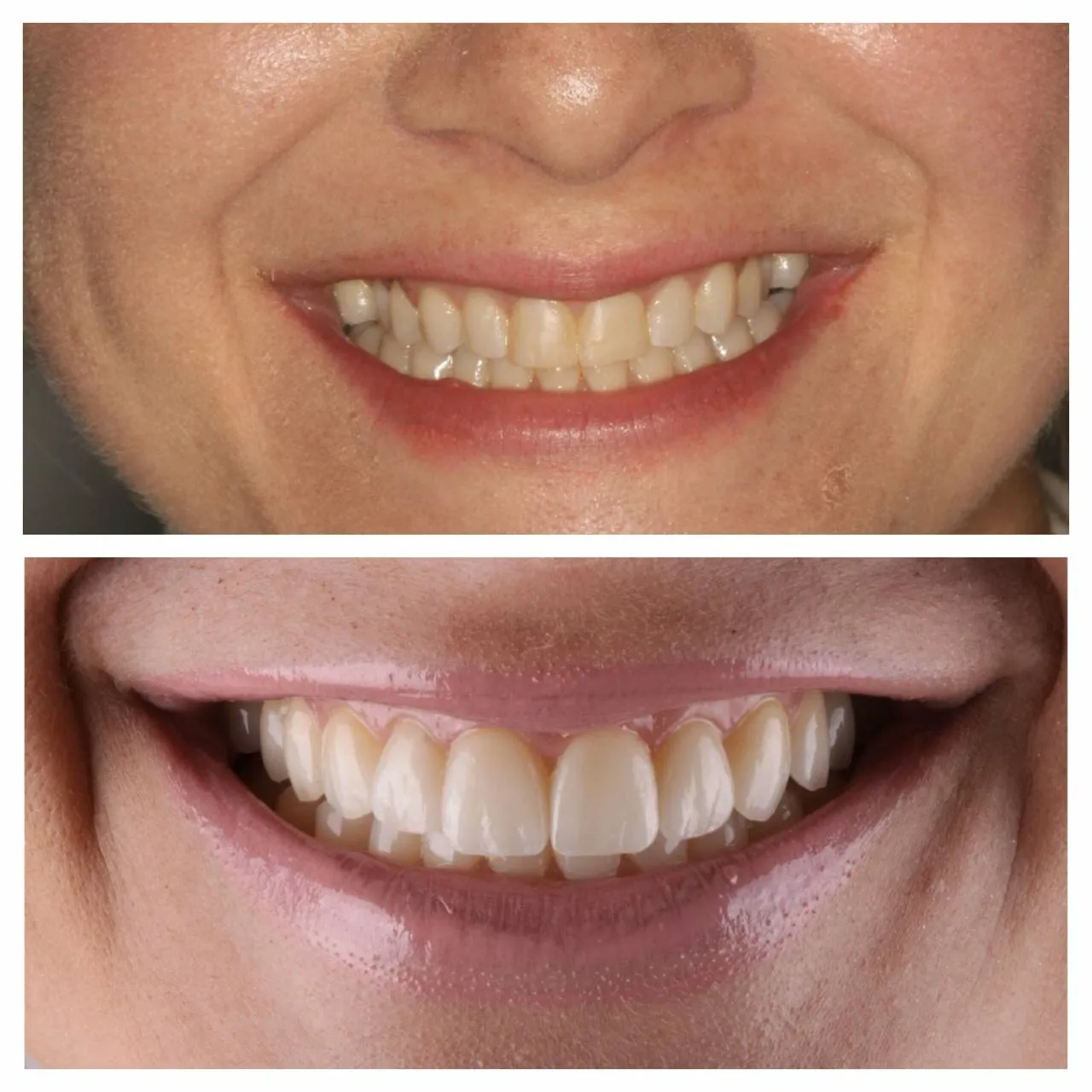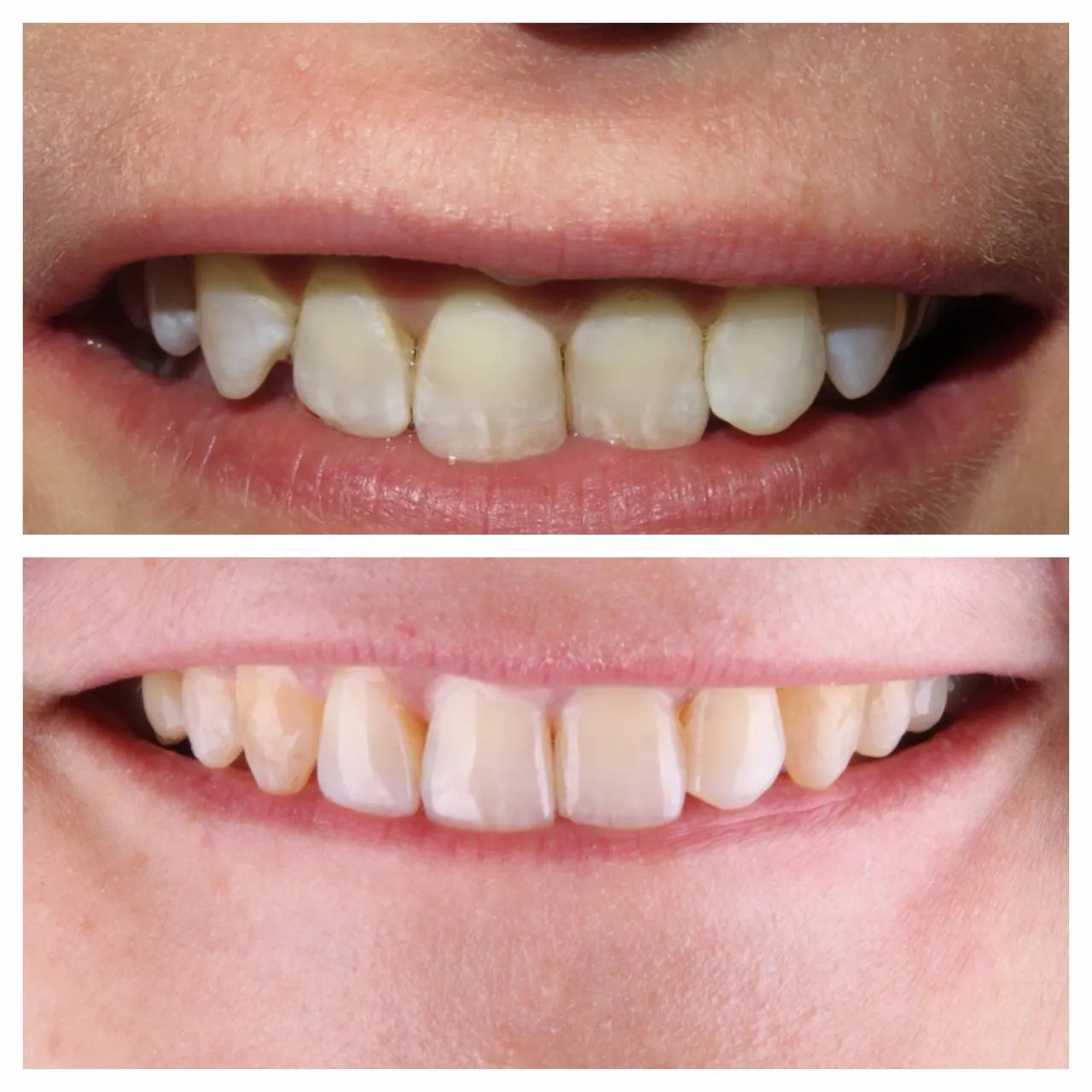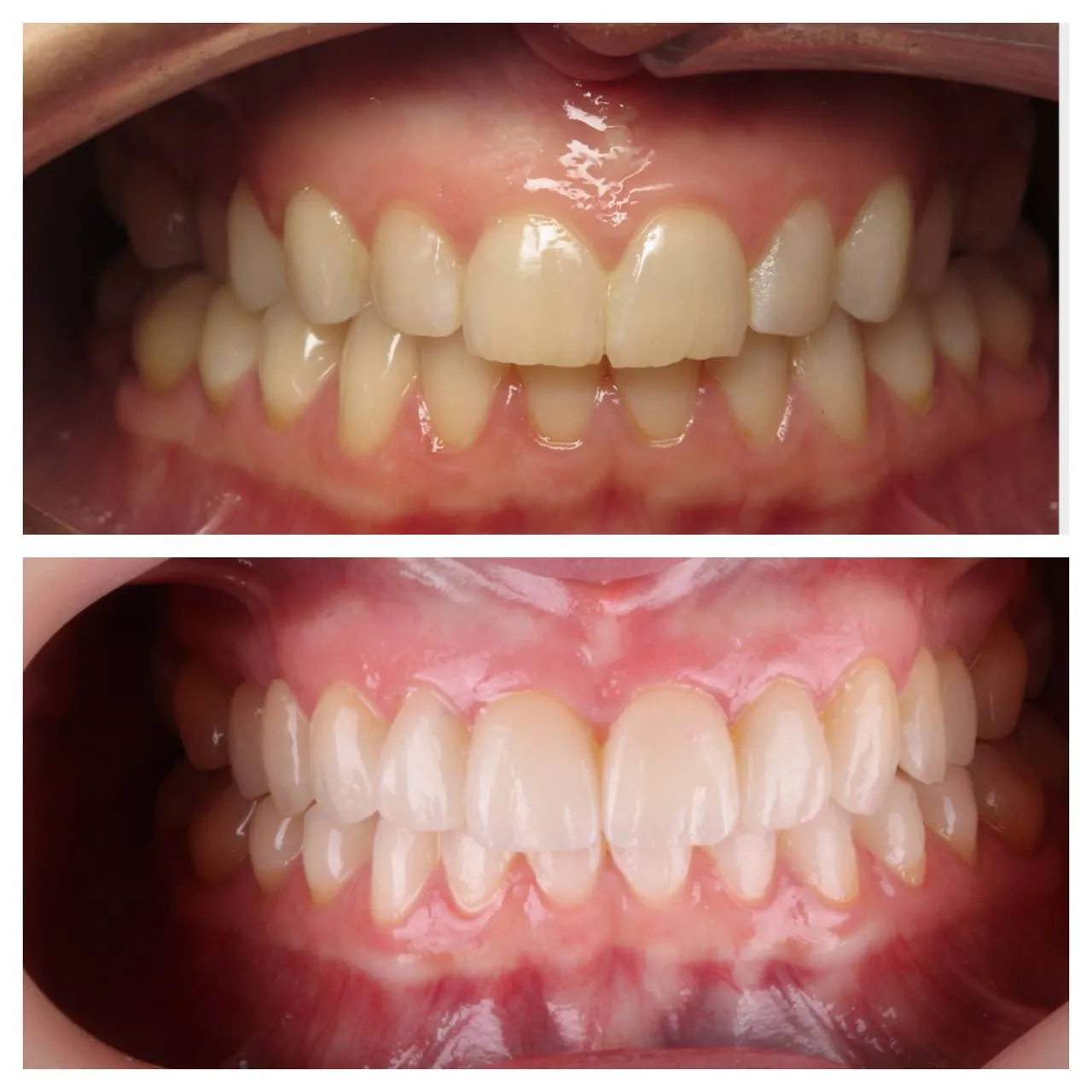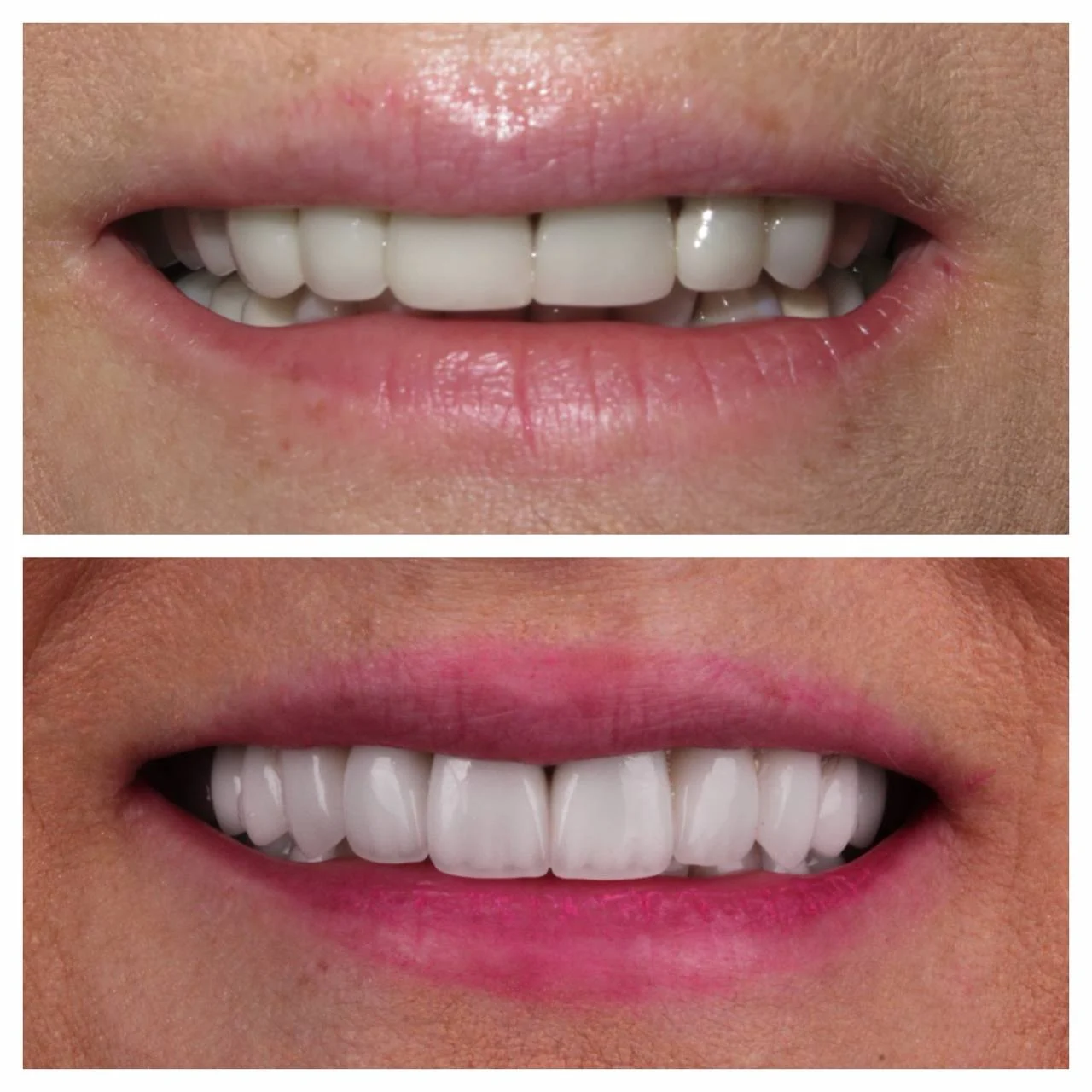
She came in with veneers that had done their job. Placed fifteen years ago, well-crafted for the face she had then. But faces move. Enamel around them had shifted in shade. The gum line had matured. What used to disappear into the smile now sat a half-tone off — visible only to her, but visible.
The problem, plainly
Older veneers age differently than the teeth around them. The porcelain itself doesn't stain — that's part of why we use it — but the neighboring enamel does. Fifteen years of coffee, wine, and living gives the natural teeth a warmer, richer character. The veneers stay exactly as they were the day they were bonded. So the smile that used to read as one continuous thing starts to read as the veneers, and everything else.
There was also the face question. A veneer designed for a woman in her thirties assumes a certain lip fullness, a certain skin tone, a certain set of expectations about what "bright" should mean at that age. Those inputs change. The porcelain didn't.
What we did
This was a refresh, not a rebuild. The underlying tooth structure was sound; the bond was sound; the bite was fine. What needed to change was the surface: shade, translucency, and the shape of the incisal edge.
We removed the existing veneers carefully — the technique here matters, because you're working in tenths of a millimeter and the goal is to preserve every bit of natural tooth underneath. The new set was designed around a slightly warmer, more layered shade — porcelain that reads as lived-in rather than freshly-installed. The incisal edge got a subtle translucency the original set didn't have. Feldspathic layering, which takes longer at the lab but reads more like real enamel under the kinds of lighting people actually live in.
The bite check
Every anterior veneer case starts with the bite, even when the patient thinks it's a cosmetic problem. Fifteen years of function on the old set had left slight wear patterns on the opposing teeth. We adjusted the new porcelain to those patterns — mimicking what her bite had already decided over a decade and a half. Fighting the bite is how new veneers chip.
The result
Three visits, a little over three weeks from consult to seat. The photograph above is the result: the same person, more herself. That's the honest test of a refresh — not whether the smile looks newer, but whether the smile looks like it belongs on the face it's attached to.
A good refresh reads as if it's always been this way.
Is a veneer refresh right for you?
Refresh candidates usually share a few things: existing veneers that are 10+ years old, sound underlying tooth structure, no significant bite issues, and a growing sense that the smile they got at 30 isn't quite the smile they want at 45. If any of that sounds familiar, the consultation is where we sort out whether refresh is the right path or whether something else — whitening the surrounding teeth first, adjusting the shade before we touch the porcelain — gets you there without a full remake.
Every case is different. That's not a hedge; it's the honest starting point. The consultation is where we look at your teeth, your bite, your face, and the specific set of tradeoffs that apply to you. We give you a written estimate at that visit.